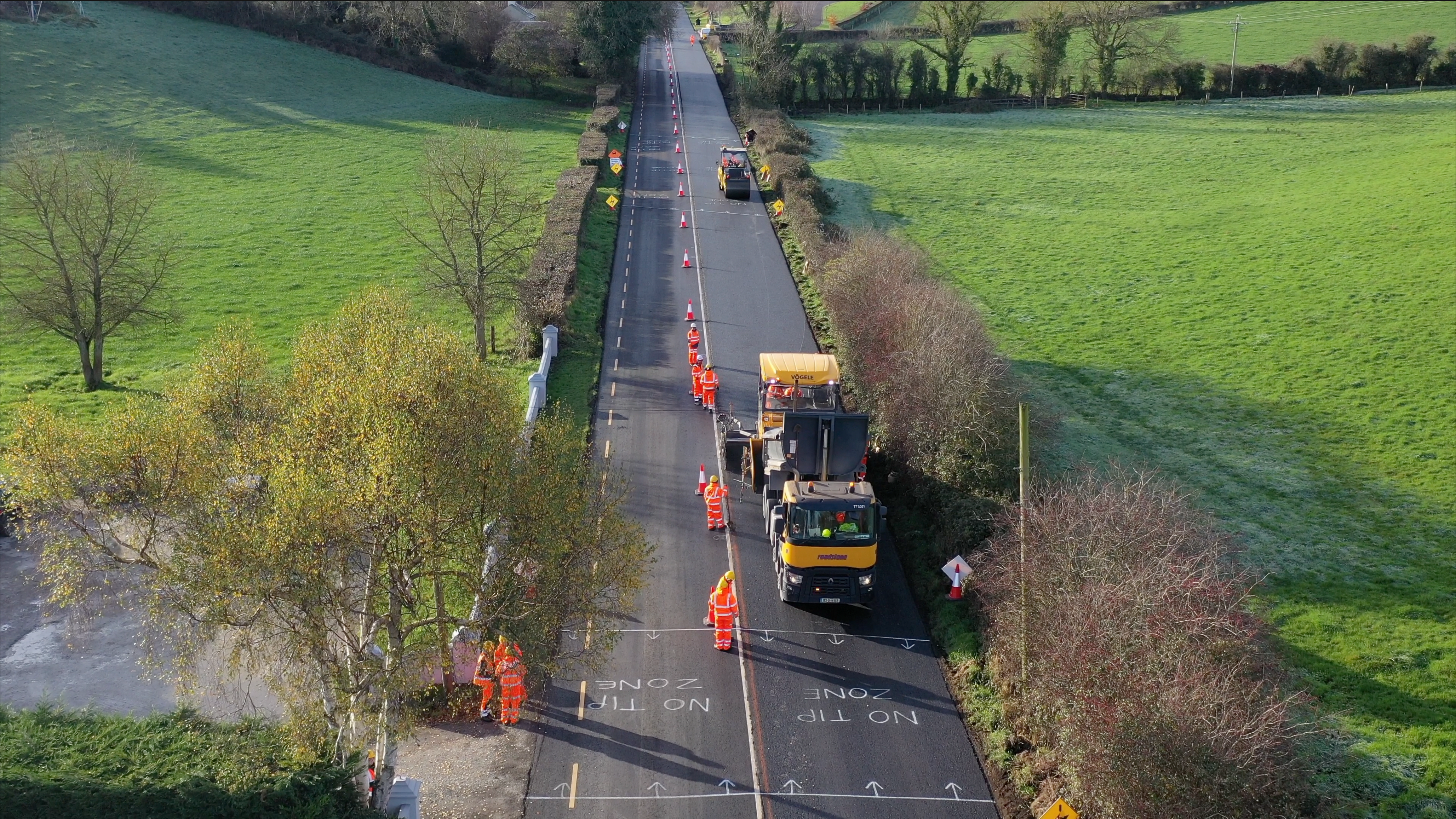
For decades, the success of road infrastructure investment has been measured in simplistic ways: how much could be built, how fast it could be built, and how many lane miles could be added. However, Jason Jackson, President, CRH Americas Materials explains how that definition of success is evolving.
Transportation leaders today are facing a hard reality: a stop-start investment model that undermines resilient construction, increasing cost pressures and demand that’s growing faster than the ability to deliver. These challenges have resulted in a shift of mindset and change in delivery model – from short-term expansion to long-term performance-based investment. Because a road that lasts longer creates less disruption and needs fewer repairs, ultimately costing less over its lifetime.
A new era of accountability: performance-based investment
More and more municipalities are leaning into performance management and data-informed investment, measuring road conditions, setting targets and prioritizing mixes that deliver the greatest lifecycle value. In other words, they’re no longer focused solely on how many miles they can pave in a given year, but on how that pavement will perform over time and at what total cost. For taxpayers, that’s good news.
Growing megatrends are rewriting the design brief
Several growing megatrends are influencing this demand for more resilient, high-performance roads:
- Population growth is increasing demand. More people means more travel, adding pressure to existing roads and reducing tolerance for disruption;
- Heavier loads from goods movement are accelerating pavement deterioration, with truck miles projected to grow faster than passenger travel, according to the U.S. Department of Transportation, and
- Extreme weather events are also aging our infrastructure. Rising heat increases rutting risk, stormwater runoff weakens subgrade strength. And the rate of recurring severe storms is also accelerating deterioration.
Much of today’s infrastructure was built for lower demand and less extreme conditions. The result is accelerated deterioration, more frequent repairs and greater disruption for commuters.
The American Society of Civil Engineering’s national infrastructure assessments consistently spotlight the gap between the state of our roads today and what they need for the future. The good news is, new mix designs, better data and more intelligent maintenance strategies are giving municipalities better tools to close this gap.
What ‘performance-first’ actually looks like
Prioritizing long-term performance means building roads to last, innovating with intention and prioritizing materials and methods that provide long term value over short term cost.
- Smarter material design: Advances in binder technology, recycled materials and mix design focus on traffic loads, weather conditions and distress risks to extend pavement life. This includes using recycled materials in a more controlled-performance-led way, so they contribute to service life.
- Local optimization: Optimizing mix designs for localized conditions can improve resistance to rutting, cracking and moisture damage, helping to build roads that last longer with fewer interventions.
- Digital quality control: Digital monitoring, better plant-to-paver visibility and more data-driven production practices can help identify issues with temperature control, moisture exposure and compaction variability from the outset to deliver more consistent outcomes.
- Predictive maintenance and asset intelligence: Sensing technologies and predictive maintenance tools turn assets into intelligent systems and allow municipalities to identify the right intervention at the right time, avoiding more costly reconstruction later. In a constrained funding environment, early intervention is one of the most powerful levers available.
- Integrated planning: Roads that are delivered in isolation, optimized for a single budget cycle, miss the benefits of long-term planning. Roads last longer when they are designed in coordination with drainage, utilities and adjacent infrastructure, reducing the costly cycle of repeated cuts, patching and premature deterioration.
A holistic approach modeled on performance over time
At CRH, we’ve built our roads business around this model because our customers need partners who understand their end-to-end paving and construction needs: quality material selection, tailored mix design, production, placement, critical utilities and ongoing maintenance.
An emergency bypass project in Wyoming demonstrated how CRH applies a holistic, integrated approach to delivery. By overlapping design, engineering, and construction phases, CRH was able to accelerate execution and respond with agility, restoring travel in less than 15 days after a catastrophic landslide destroyed a critical section of the highway.
When roads are planned alongside utilities: stormwater drainage, energy, and telecommunications, the outcome is fundamentally different. This type of approach allows municipalities to sequence investment intelligently, reduce disruption to communities and extract far greater value from every dollar.
A responsibility to build the roads of our future
The pressures on road networks aren’t easing. Traffic volumes will continue to rise. Freight will continue to intensify. Weather volatility will continue to test pavements beyond their original design intentions.
If we know the roads of tomorrow will carry more, endure more and cost more, then we have a responsibility to build differently today.
The BUILD America 250 Act proposes a five-year strategic approach to investing in core infrastructure such as highways, bridges, transit and rail. As we approach our nation’s 250th anniversary, let’s celebrate by renewing our commitment to building a stronger, performance-driven and more resilient infrastructure system.